



B-cell malignancies are increasingly being treated with targeted therapy given their potential to induce significant clinical effects and lead to sustainable treatment outcomes when used in combination with other active agents. Zanubrutinib, a second-generation BTK inhibitor with high BTK selectivity and established clinical activity, is being evaluated in combination with other agents in various indications including CLL/SLL, MCL, FL and DLBCL. Understanding the rationale for combination with other targeted therapies is key to future clinical investigation.
Why Combine Zanubrutinib with Other Therapies?
BTK is involved in the B-cell receptor (BCR) pathway controlling the survival of malignant B cells. Whilst the BTK inhibitor has been shown to have demonstrated clinical responses in some patients, the activity can be enhanced by adding agents with different mechanisms of action.
While increased response rates have become the norm, improving depth of response, particularly to achieve undetectable MRD levels and allow a duration of treatment that correlates with depth and quality of response are emerging areas of investigation. By adding a BCL2 inhibitor to a BTK inhibitor plus anti-CD20 antibody regimen, in clinical trials for the treatment of CLL/SLL patients, the aim is to be investigated for their effects on malignant B cells.
Zanubrutinib With Obinutuzumab
One of the first combinations to be evaluated with Zanubrutinib was the anti-CD20 antibody obinutuzumab. A phase 1b clinical study investigated this combination in patients with CLL/SLL as well as patients with FL that was relapsed or refractory. The therapy led to substantial clinical effects in patients with CLL/SLL and FL; however, it was associated with instances of adverse events, including severe neutropenia, infections and hemorrhages, with fatigue occurring in some cases.
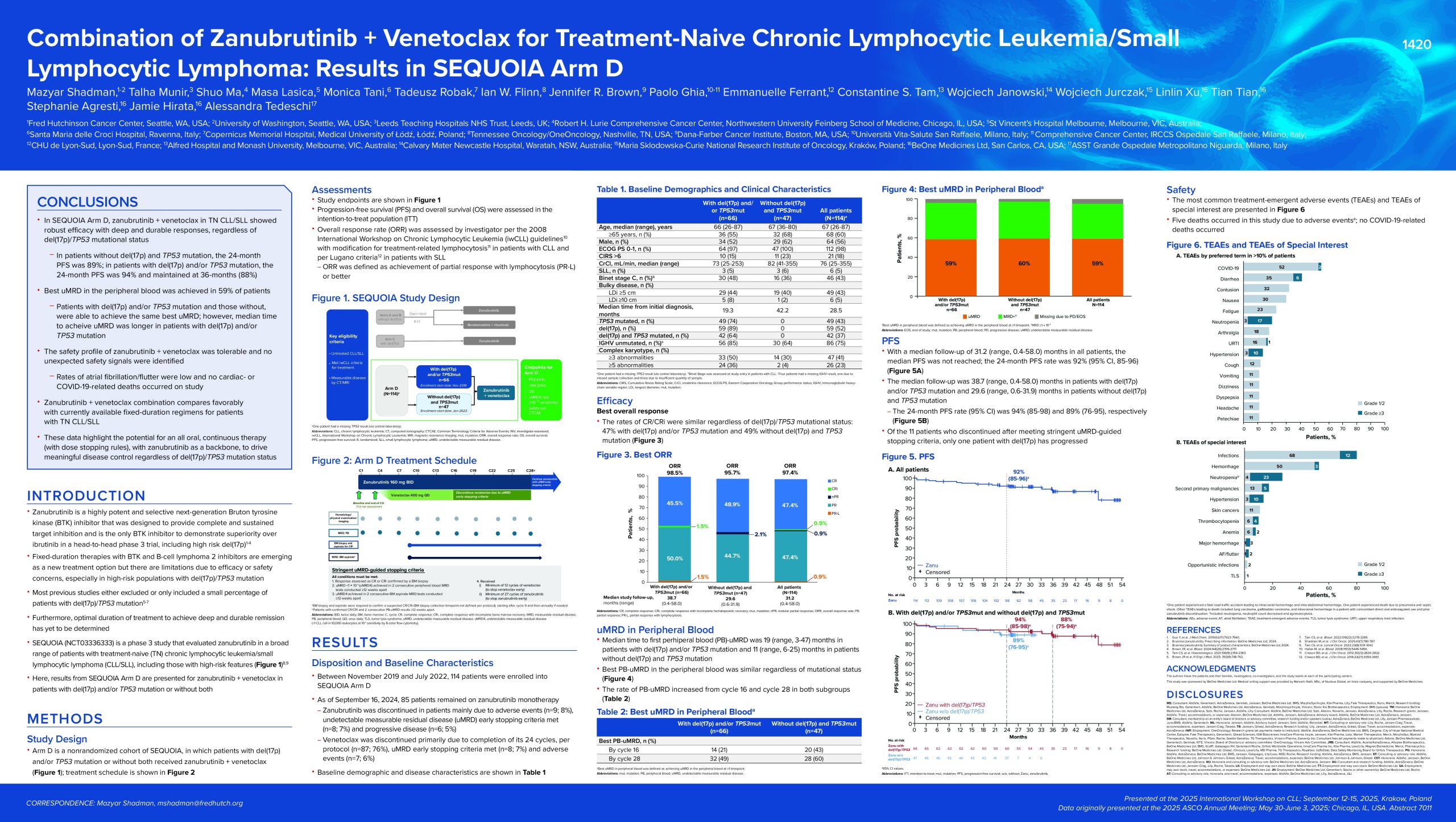
The Zanubrutinib and obinutuzumab combination forms a solid basis for further research of other antibody-based combinations, in addition to targeted BTK-inhibition. Different mechanisms of action provide complementary effects. Hence, such combinations represent an area of ongoing clinical research in B-cell malignancies. Results from a phase 2 study Zanubrutinib, obinutuzumab, and venetoclax were reported in previously untreated CLL/SLL patients. With a median follow-up of 25.8 months, 89% of evaluable patients achieved undetectable MRD in both blood and bone marrow. Patients were treated based on MRD status, with those who remained in remission off treatment. Results from longer-term follow-up of patients treated were presented at the ASH Annual Meeting.
In a longer follow-up of patients included in this study published in 2026 (median observation time was 69 months), 96% of the 119 patients evaluated had undetectable MRD values in the blood, and 92% of 95 patients evaluated had undetectable MRD values in both the blood and bone marrow. Therefore, MRD-guided treatment discontinuation of triple therapy can be a promising approach for patients with CLL/SLL. Randomized clinical trials are needed to establish whether this approach is superior to conventional therapies.
Combination Therapy in Relapsed CLL
Relapsed disease is another area that is of great interest. The CLL2-BZAG trial (NCT02882,219) is a phase 2 study of Zanubrutinib, venetoclax, and obinutuzumab given to patients with CLL that is relapsed or refractory. Patients can receive optional bendamustine debulking prior to starting trial treatment.
This patient population had prior exposure to both BTK-inhibitors as well as venetoclax. All 39 patients experienced a complete response to their disease with the regimen of triple therapy given for 6 months. On blood MRD assessment 52.5% of patients had undetectable levels of cancer cells. The best MRD negative rate as assessed in the bone marrow was 85% for patients on the treatment for 6 months. It is important to distinguish between the results from this clinical study and the results from more comprehensive clinical studies to assess if the use of triple therapy is indeed more advantageous than other treatments. Factors that need to be considered are the patient and their disease, the pre-existing treatment given to the patient, the biology of the disease, the potential toxicity of the treatment and the intended goal of the treatment.
Exploring Zanubrutinib in Mantle Cell Lymphoma
MCL is another area where Zanubrutinib has been evaluated. A Phase 2 study of previously untreated patients with high-risk MCL (TP53 mutated) assessed the safety and efficacy of Zanubrutinib in combination with obinutuzumab and venetoclax. Patients with TP53 abnormalities have a poor prognosis and have not achieved significant benefit with traditional approaches to the treatment of MCL.
These new combination strategies are part of a new wave of therapies aiming to treat the aggressive B-cell malignancies (agBMCs) without the use of chemotherapy. Strategies are still needed to optimize the new therapeutic approaches, i.e. to determine which patients are most likely to benefit from a specific treatment and which molecular criteria can predict resistance to therapy.
Zanubrutinib With R-CHOP in DLBCL
Studies have also investigated the use of Zanubrutinib in combination with standard chemoimmunotherapy in B-cell malignancies. For example, a 2026 phase 2 study evaluated the use of Zanubrutinib in combination with the standard R-CHOP regimen in patients with previously untreated DLBCL that harbor specific genetic abnormalities (1).
Important studies are also needed to determine the benefit of combining BTK inhibitors with conventional chemoimmunotherapy and whether there is a clinically significant benefit in addition to toxicities that are dose limiting and overlap.
Safety and Clinical Considerations
It is also important to note that combinations can increase the treatment complexity and potentially have cumulative or even overlapping toxicities. Therefore, in addition to the BTK-inhibitor related adverse events, the adverse events related to the other part of the combination must be monitored.
Neutropenia, infections, thrombocytopenia, fatigue, diarrhea, bruising and infusion reactions have been reported. Monitoring for adverse events needs to be done with due consideration to the currently used agents as well as the new agent under investigation, in the specific treatment context.
Future Directions
Future studies with Zanubrutinib will be aimed at identifying ideal partner drugs in various cancer entities, assessing treatment duration based on MRD status in individual patients, treating molecularly defined patient cohorts to induce deep and long-lasting remissions, and to overcome treatment resistance.
Now for the important stuff. For healthcare professionals the big question is where you can add value to existing treatment regimens with the addition of Zanubrutinib to a targeted or immunotherapeutic regime. This will need to be shown in randomized trials with a clinically relevant end point to assess both PFS and OS, as well as the degree of remission and impact on the quality of life for patients with B-cell malignancies. It remains to be seen whether combination of Zanubrutinib with other targeted or immunotherapeutic agents will lead to meaningful improvements in outcomes of patients with B-cell malignancies and whether these will be offset by excessive treatment-related toxicity.
Medical Disclaimer: The content presented in this article is intended solely for educational purposes and is not a substitute for professional medical advice, diagnosis, or treatment recommendations.


