

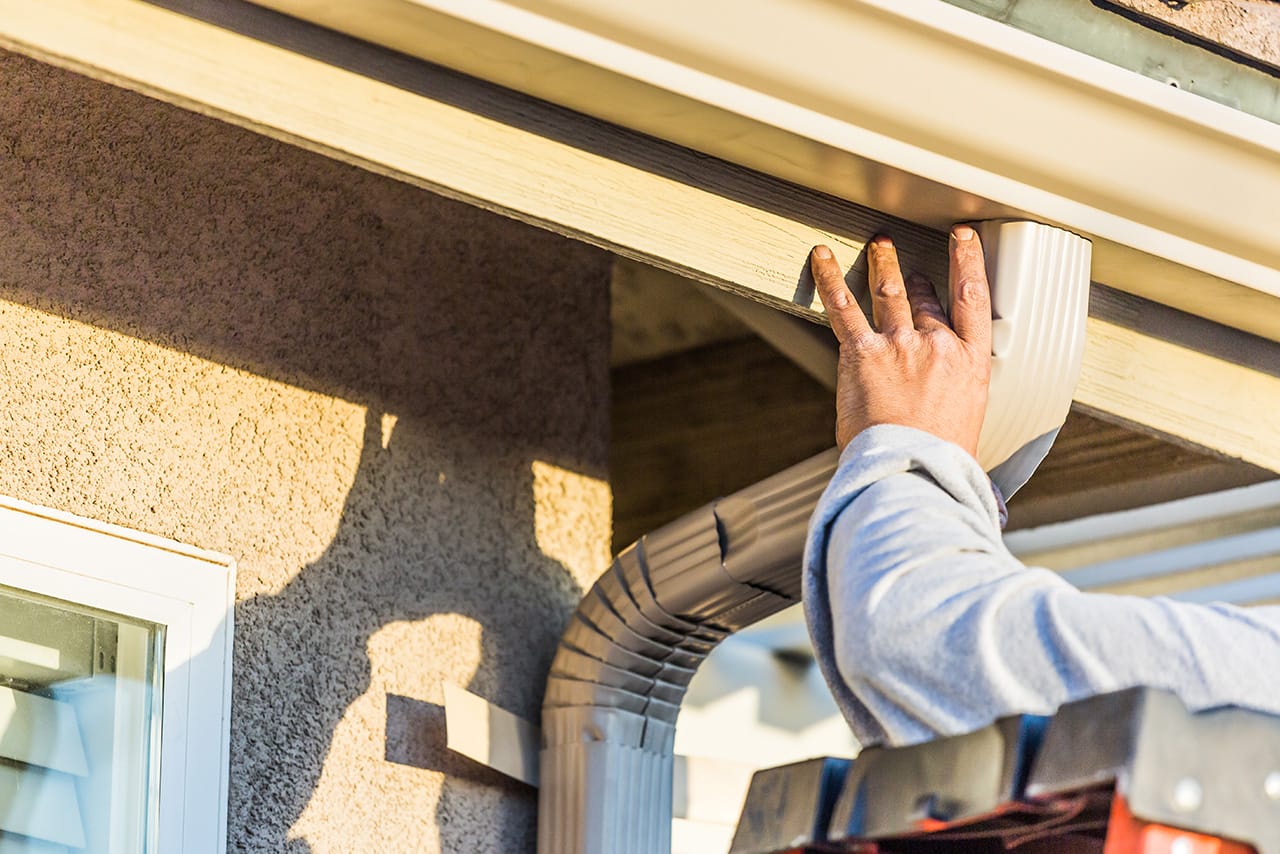
A gutter system is only as effective as its downspouts. Gutters collect rainwater from the roof, but downspouts control where that water goes next. When downspouts are missing, clogged, damaged, or poorly placed, rainwater can collect around the foundation and create serious long-term problems.
For homeowners, property managers, and building owners, proper downspout installation is one of the most important parts of foundation protection. A well-designed gutter drainage system helps move water away from the structure, protecting the roof, siding, basement, landscaping, and foundation from unnecessary moisture damage.
Whether you are planning rain gutter installation, dealing with gutter repair, or considering downspout replacement, understanding how proper drainage works can help prevent expensive water-related issues.
Why Downspouts Are Essential for Proper Gutter Drainage
Gutters are designed to catch water as it runs off the roof. Downspouts complete the system by carrying that water safely to the ground and directing it away from the building. Without enough downspouts, or with downspouts placed in the wrong locations, water may overflow, pool near the foundation, or run directly into landscaping beds.
Proper gutter drainage helps prevent:
- Foundation water damage
- Basement leaks
- Soil erosion
- Mold and mildew growth
- Siding stains
- Roof edge damage
- Landscape washout
- Cracked walkways or concrete settling
In both residential gutter systems and commercial gutter systems, downspouts should be positioned to handle the amount of water coming from the roof. Larger roof areas may need more downspouts, wider gutters, or additional exterior drainage solutions to manage heavy rainfall.
How Poor Downspout Drainage Damages Foundations
Foundation damage often starts slowly. At first, you may only notice small puddles near the building after rain. Over time, repeated water exposure can soften the soil around the foundation. This can cause soil expansion, erosion, settlement, and cracks in concrete or block foundations.
When water sits too close to a home or building, it can also enter through small foundation gaps. This may lead to basement moisture, musty smells, mold concerns, or damage to stored items and interior finishes.
Common drainage problems caused by poor gutter systems include:
Water Pooling Near the Foundation
If downspouts release water too close to the building, it can collect along the foundation wall. This is one of the most common causes of foundation water damage.
Overflowing Gutters
Clogged or undersized gutters can spill water over the edge, creating heavy runoff near the base of the structure.
Eroded Landscaping
Poor downspout placement can wash away mulch, soil, plants, and decorative rock, leaving low spots where water continues to collect.
Basement Leaks
When soil around the foundation becomes saturated, water pressure can push moisture through cracks or weak points.
Signs You Need Downspout Repair or Replacement
Downspout repair should not be delayed when the system is no longer moving water properly. Small issues can quickly lead to larger drainage and foundation problems.
Watch for these warning signs:
- Water spilling from gutter corners
- Downspouts pulling away from the wall
- Crushed, bent, or disconnected downspouts
- Rust, holes, or visible corrosion
- Water pooling near the foundation
- Soil erosion below downspout outlets
- Stains on siding or exterior walls
- Basement dampness after rain
- Gutters sagging or overflowing
If the problem is limited to one damaged section, repair may be enough. However, downspout replacement may be the better option when the system is old, poorly designed, or repeatedly failing.
The Role of Seamless Gutters in Water Damage Prevention
Seamless gutters are a smart choice for many properties because they reduce the number of joints where leaks often develop. Traditional sectional gutters have multiple seams, and those seams can weaken over time due to weather, debris buildup, and water pressure.
With seamless gutters, the system is custom-fitted to the property, helping improve durability and water flow. Fewer seams mean fewer leak points, which supports better water damage prevention and long-term performance.
For property owners looking for professional gutter installation, seamless gutter systems, and drainage protection, Southwest Seamless Rain Gutters offers helpful solutions designed to move water away from homes and buildings more effectively.
Best Practices for Downspout Installation
A proper downspout system should be planned carefully. It is not enough to simply attach a downspout at the corner of the building. The system must be designed around roof size, gutter capacity, slope, landscaping, and drainage direction.
Place Downspouts Strategically
Downspouts should be installed where they can collect water efficiently and discharge it safely. Corners, roof valleys, and long gutter runs often need special attention.
Direct Water Away from the Foundation
Water should never be released directly beside the foundation. Downspout extensions, splash blocks, or underground drains may be needed to carry water farther away.
Use Enough Downspouts
Too few downspouts can cause gutters to overflow during heavy rain. A professional gutter installer can calculate the right number based on roof size and expected rainfall.
Check the Ground Slope
Even a good gutter system can fail if the ground slopes toward the building. Proper grading and exterior drainage solutions may be needed for complete foundation protection.
Gutter and Downspout Maintenance Tips
Regular gutter maintenance helps prevent clogs, leaks, and drainage failure. Property owners should inspect gutters and downspouts at least twice a year, especially before and after heavy storm seasons.
Helpful maintenance tips include:
- Clean leaves, dirt, and debris from gutters
- Flush downspouts with water to check for clogs
- Inspect fasteners and brackets
- Look for sagging or separated sections
- Check for rust, cracks, or holes
- Confirm water flows away from the foundation
- Trim nearby trees to reduce debris buildup
After major storms, walk around the property and look for standing water, washed-out landscaping, or overflow marks. These are signs that the gutter drainage system may need repair.
Why Professional Gutter Contractors Matter
Professional gutter contractors understand how roof drainage solutions work as a complete system. They evaluate roof size, gutter pitch, downspout placement, material durability, and foundation drainage before recommending repairs or installation.
Improper installation can lead to repeated gutter repair, leaks, overflow, and foundation damage. A professional installer helps ensure that gutters and downspouts are properly sized, securely attached, and positioned for long-term water control.
This is especially important for commercial gutter systems, larger homes, and properties with complex rooflines. A stronger drainage plan today can prevent costly structural and exterior damage later.
Conclusion
Downspouts play a critical role in protecting your foundation from water damage. While gutters collect rainwater, downspouts determine whether that water drains safely away from the building or creates problems around the foundation.
Proper downspout installation, timely downspout repair, seamless gutters, and routine maintenance all work together to support long-term home water protection. By paying attention to drainage issues early, property owners can protect foundations, roofs, siding, basements, and landscaping from avoidable damage.
For homeowners and property managers who want reliable gutter systems and better drainage protection, learning more from Southwest Seamless Rain Gutters is a practical next step toward long-lasting water damage prevention.
