

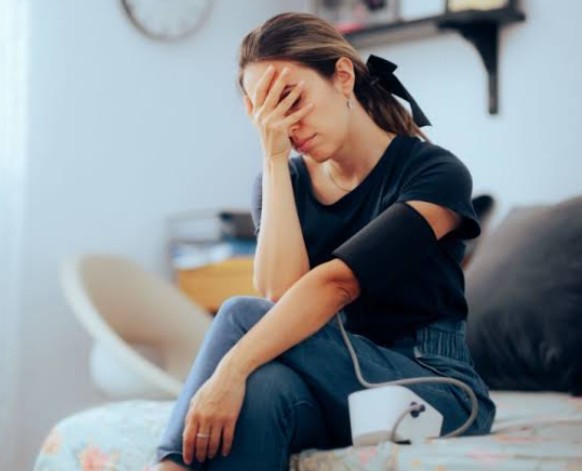
Most people with a blood pressure concern already know they should measure at home. Far fewer manage it consistently enough for the readings to mean anything. The gap between intention and habit is where home monitoring usually fails — not from lack of seriousness, but from friction: finding the cuff, remembering the time, recording the number somewhere that will never be opened again.
Why Home Readings Beat Occasional Checks
A single reading in a clinic is a snapshot taken under unusual conditions: travel, waiting rooms, conversation and the mild tension of the appointment itself all nudge the number upward. Home readings, taken calmly and repeatedly, describe the life that is actually being lived — mornings, evenings, stressful days, restful ones. Doctors increasingly treat a well-kept home log as more informative than the isolated office figure.
The value multiplies with volume. Two readings a day for a fortnight produce a pattern; two readings a month produce anecdotes. Patterns support decisions: whether lifestyle changes are working, whether evening values behave differently from morning ones, whether a stressful period is leaving fingerprints on the cardiovascular system. Anecdotes mostly support worry.
Making Measurement Automatic
The routine that sticks is the one that requires the fewest decisions. Same chair, same time, same arm, no preparation beyond sitting quietly for a moment. This is where a well-designed blood pressure smartwatch earns its place on the wrist rather than in a drawer: the measuring instrument is already being worn, so the reading happens in the flow of the day instead of competing with it. A scheduled reminder at breakfast and another in the evening quietly removes the remembering problem.
Automation helps at the recording end too. Readings that file themselves, timestamped and charted, eliminate the notebook that gets lost and the spreadsheet that gets abandoned. What remains is the part that actually matters — glancing at a trend line once a week and noticing its direction.
The 24-Hour Picture
Some questions cannot be answered by spot checks. Whether pressure falls properly overnight, how it behaves through a demanding workday, what happens during sleep before an early start — these require a fuller day of scheduled measurement. A 24-hour ambulatory-style plan, with readings taken at regular intervals through day and night, was once a hospital procedure involving a bulky recorder and a disrupted night’s sleep.
Bringing that capability to the wrist changes who can access it and how often. The resulting report — daytime averages, night-time dipping, the morning surge — gives a clinician the kind of evidence that previously took a specialist referral to obtain. For the wearer, it answers questions that spot checks only raise.
From Numbers to Conversations
Home data reaches its full value when it leaves the house. A trend report shared with a doctor turns a short appointment into an efficient one: less time reconstructing history, more time discussing response and next steps. Vague statements like ‘it has seemed high lately’ become dated charts with context attached.
Sharing works inside the household too. An adult child can follow an elderly parent’s readings from a distance, with alerts when something needs attention. The arrangement reassures both directions — the parent keeps independence, the family keeps visibility, and nobody needs to phone daily asking after numbers.
Habits That Survive Busy Weeks
Every routine faces the same test: the chaotic week. Travel, deadlines and visitors break fragile systems, which is why the robust ones are designed to degrade gracefully. Missing one reading is noise; missing five is a gap. A wearable routine degrades well precisely because the instrument travels on the wrist and asks for seconds rather than setup.
The other survival trick is keeping the purpose visible. The goal was never collecting readings; it was understanding a trend and acting on it. A weekly glance at the chart, a monthly summary, a conversation at the next appointment — these are the payoffs that keep the morning ritual alive long after novelty fades.
Choosing the Moments That Matter
A useful home routine measures at the moments with the most to say. Morning readings, taken before caffeine and conversation, capture the body at its most standardised; evening readings, taken at the same hour daily, measure how the day was absorbed. Around exercise, an extra pair of readings — one before, one within a couple of minutes after — adds the recovery dimension that spot checks miss.
Symptom moments matter too. A reading taken during light-headedness, palpitations or unusual fatigue converts a vague sensation into dated evidence, which is precisely what a clinician needs to judge whether the symptom and the pressure are related. The habit to build is simple: routine readings at routine times, plus one whenever the body asks a question.
A Routine That Grows More Valuable
Six months of consistent home data is worth more than six times one month of it. Trends clarify, seasonal patterns emerge, and the effect of every lifestyle experiment becomes measurable. The earlier the routine starts, the richer the baseline it builds. Choosing a blood pressure smartwatch that makes measuring effortless is less a gadget decision than an investment in every future conversation about heart health — each one improved by evidence gathered quietly, morning after morning, at home.
