

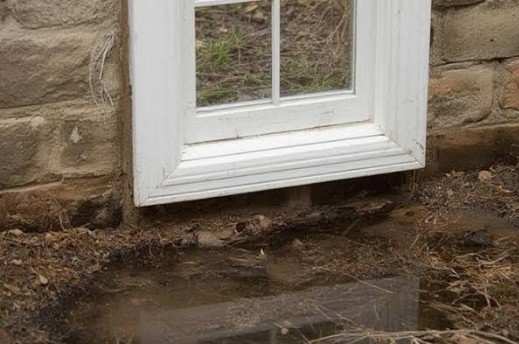
Rainwater can turn a neglected window well into a small holding basin beside the foundation. Once leaves, soil, and debris block the drain, water begins pressing against the window frame, masonry joints, and surrounding wall. Recognizing the resulting leak pattern helps property owners identify the source before moisture spreads into finished basement materials.
Water Stains That Begin Directly Below the Window
Brown or yellow marks beneath a basement window often form after water collects high enough to reach the frame or sill. Gravity pulls that moisture downward behind drywall, across concrete block, or along the face of a poured wall, leaving a narrow trail that widens near the floor. Fresh staining after heavy rain usually points toward an exterior drainage problem rather than indoor humidity. Inspectors also check whether the mark follows a framing member, because wood studs can carry water farther from the opening than expected. Homeowners searching for basement leak repair near me should note whether the stain appears only after storms, how quickly it dries, and whether the window well contains standing water.
Dampness Spreading Sideways Along the Wall Base
Lateral moisture patterns can appear when water enters near the window but travels through hollow concrete block cores or behind finished wall panels. Instead of forming a straight line below the opening, the damp area may stretch several feet along the floor joint. Porous masonry absorbs water and redistributes it through capillary action, which can make the visible damage seem unrelated to the clogged well. Baseboards may swell, paint may blister, and flooring edges may darken even though the original entry point remains higher on the wall. Technicians trace the moisture path with meters and visual checks before planning basement leak repair.
Why Does Water Appear Only During Hard Rain?
Light rainfall may drain through partially blocked gravel, while a strong storm overwhelms the remaining space within the well. Rising water then presses against weak seals around the window, small mortar gaps, and frame fasteners until it finds an opening. Short, intense downpours often expose the problem faster than long periods of drizzle because roof runoff and surface water arrive at once. Nearby downspouts can make the condition worse if they discharge beside the well or send water across sloped landscaping. Property owners may therefore see a dry basement for weeks, followed by sudden leakage during one severe storm.
Peeling Paint and Soft Drywall Around the Opening
Paint usually bubbles when water becomes trapped behind the coating and pushes it away from the surface. Drywall near a window may also feel soft, crumble at the corners, or show loose joint tape where repeated wetting has weakened the gypsum and paper facing. Hidden insulation can remain damp long after the visible surface dries, creating musty odors and slowing evaporation inside the wall cavity. Removing only the damaged paint does not correct the clogged drain or failed window seal. Effective repair addresses both the exterior water buildup and any interior materials that can no longer dry or perform as intended.
Efflorescence Forming Beneath the Window Well
White, powdery residue on concrete or block often shows that water has moved through masonry and carried dissolved minerals toward the basement surface. Evaporation leaves those salts behind in streaks, patches, or lines below the window opening. Unlike mold, efflorescence usually brushes away easily, but it often returns after the next period of seepage. Repeated deposits indicate that moisture continues to pass through the wall even when no puddle forms indoors. Contractors use the location and shape of the residue to help determine whether water enters through the frame, a mortar joint, or saturated masonry beside the well.
Floor Puddles That Form Near One Basement Corner
Localized puddling near a window can occur when water travels down the wall and reaches the slab before spreading across the room. Floor slope then directs the moisture toward a corner, drain, or low area that may sit several feet from the actual entry point. Rugs, boxes, and finished flooring can hide the route until damage becomes more extensive. Testing the surface elevation and following water marks backward often reveals the connection to the window well. Anyone arranging basement leak repair should avoid assuming the puddle began where it finally collected.
Rust Marks Around Window Hardware and Metal Framing
Orange or brown staining near screws, steel lintels, corner bead, or metal window components can signal repeated moisture exposure. Corrosion develops slowly, so visible rust often means water has reached the area more than once. Fasteners may lose strength, frames can become difficult to operate, and expanding rust may crack nearby paint or masonry. Inspectors look for loose anchors, swollen trim, and gaps created as metal parts deteriorate. Replacing corroded hardware may be necessary, but drainage and sealing work must stop the water first.
Musty Odors That Linger After the Basement Dries
Odor often remains because porous materials hold moisture after the floor and wall surface appear dry. Wet wood, drywall paper, insulation, dust, and stored cardboard can support microbial growth inside the wall cavity. Air movement carries that smell through trim gaps, electrical outlets, and window-frame openings, making the entire room feel damp. Dehumidifiers may lower indoor humidity, yet they cannot prevent the next leak if the well continues filling during storms. A full inspection checks concealed materials and determines whether removal, drying, or treatment is needed.
Cracks Developing Around the Window Corners
Diagonal cracks extending from window corners may result from structural movement, but water can make existing weaknesses more visible. Saturated soil beside the foundation adds pressure, while freeze-thaw cycles or repeated wetting can loosen mortar and widen small gaps. Window openings already interrupt the wall’s continuity, so stress often concentrates around their edges. Contractors compare crack width, direction, displacement, and moisture patterns before deciding whether the problem needs sealing, drainage work, or structural reinforcement. Surface patching alone may fail if outside water pressure remains unchanged.
What a Complete Window Well Repair Should Address
Proper correction may include clearing debris, restoring the drain, replacing gravel, raising the well edge, adding a fitted cover, resealing the window, or improving nearby grading. Downspout extensions and gutter repairs can further reduce the amount of water reaching the area during storms. Interior work may involve drying framing, replacing damaged drywall, treating masonry, or connecting seepage to a perimeter drainage system. Kennedy and Sons traces basement water problems back to their source by inspecting window wells, foundation gaps, drainage patterns, damp wall areas, and signs of structural movement. That detailed review allows the team to recommend repairs that fit the property’s actual conditions instead of relying on a quick patch that may fail after the next heavy rain.
