

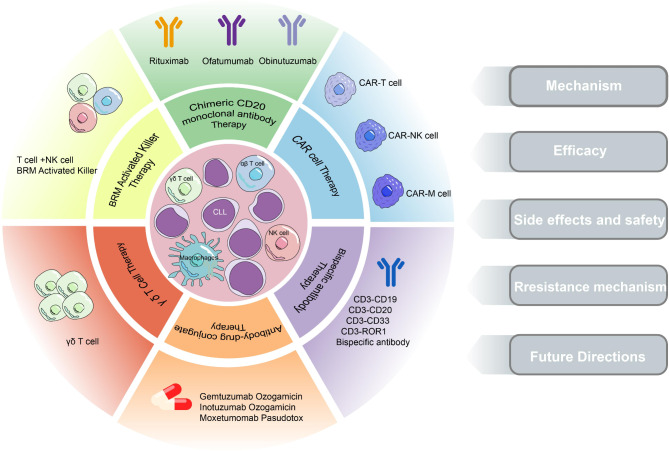
Chronic lymphocytic leukemia (CLL) affects the B lymphocytes, or B cells, a type of white blood cell in the body’s immune system. The cancer can develop in the blood, in the bone marrow, in lymph nodes, in the spleen, or in other organs and tissues of the body. As CLL progresses, abnormal B cells can accumulate. Although CLL can be a progressive and often terminal disease, it may often develop slowly. Often individuals with CLL will live for many years before showing any signs or symptoms of the disease and often do not need to be given treatment for the disease for many years. Eventually CLL does tend to become active and begin to progress in most people. That is the time when the individual will require medical treatment for the CLL.
There have been significant developments in the approach to CLL management and in the manner that CLL is studied. The use of the diagnostic tests, such as FISH and the molecular markers, and targeted therapy, in addition to new treatment regimens, have allowed for a much more individualized approach to the management of patients with CLL. For many patients with CLL, management is no longer confined to chemotherapy.
Understanding When Treatment Is Needed
Not everyone with CLL needs to start treatment right away. Patients with early-stage CLL and no symptoms are commonly managed with an “active surveillance” or “watch and wait” approach. During this time, the healthcare team follows the patient’s blood work, size of lymph nodes and spleen, symptoms and overall health.
While people with CLL can remain on watch and wait for many years, there are times when CLL becomes active and starts to cause problems, which often need treatment. These complications can include development of worsening anemia or low platelet counts, lymph node or spleen enlargement, persistent high temperature, night sweats, unintentional weight loss and fatigue.
An increasing lymphocyte count can be one factor in assessing the severity of a patient’s condition, but a rising lymphocyte count alone does not mean that a patient needs treatment for CLL. All factors of a patient’s condition need to be considered.
Advances in Targeted Therapy
Targeted therapy to block the proteins critical to CLL cancer cells to thrive and propagate has become an important treatment option. By using therapies aimed at specific proteins these cancer cells require to sustain themselves such as BTK and BCL-2, the treatments create a unique approach to address the special needs of each individual CLL patient.
There are several classes of targeted therapies for CLL, including BTK (Bruton’s tyrosine kinase) inhibitors and BCL-2 (B-cell lymphoma 2) inhibitors. BTK inhibitors such as Zanubrutinib ibrutinib, and acalabrutinib are designed to block Bruton’s tyrosine kinase which is critical in the B-cell receptor signaling pathway of CLL cells and are important in the treatment for CLL. BCL-2 inhibitors, target the BCL-2 protein that CLL cells use to evade normal cell death. By blocking BCL-2 in CLL cells, BCL-2 inhibitors can induce CLL cells to undergo normal cell death.
Another approach to the treatment for CLL is the class of BCL-2-inhibitors. In CLL-cells the anti-apoptotic BCL-2 protein is up-regulated, which prevents these cells from undergoing apoptosis, or programmed cell death. By blocking BCL-2, CLL-cells can be made to die. These have opened many new options for patients with CLL as an alternative to traditional chemotherapy.
The Importance of Molecular Testing
For many patients with CLL, a more individualized approach to treatment of their CLL is now possible with more information on the biological or molecular characteristics of their cancer. Information obtained from molecular and genetic testing can be a useful guide for planning treatment.
Genetic and molecular tests can identify a number of important CLL characteristics including TP53 mutations, 17p deletions and IGHV mutation status. These test results can be an important consideration in the development of a treatment plan and in assessment of CLL-related risk.
Molecular testing provides part of the information required for treatment planning. The results obtained from molecular testing must be integrated with clinical information (e.g. disease symptoms and severity) and other patient-related factors.
Combination and Time-Limited Treatment
As mentioned previously, different strategies are available for treatment of CLL, like using different medications separately, given at the same time, or are affecting the cells in different ways.
Some treatments are given for a period of time and then stopped rather than being given all the time. The use of time-limited treatment is important for some patient groups as it allows periods of time without treatment. This is particularly the case for certain BCL-2-inhibitors-based combination regimens, which are intended to be used for a defined treatment period in selected patients. The decision between time-limited and long-term therapy will depend upon a number of factors including the individual patient’s disease and treatment history, potential side effects of therapy, interaction with other medications the patient is taking, monitoring requirements, and patient preferences.
Improving Treatment Safety
There is more to improving treatments for CLL than just increasing their effectiveness. Monitoring for side effects and for the treatment itself is crucial to maintaining patients’ health in the long term.
Targeted therapies can have different side effects. Some cancer treatments require closer monitoring of the blood counts, blood pressure, heart function, kidney function or liver function. Because of the CLL itself affecting the immune system of the patient, the cancer patient is also at greater risk of infections. In addition to identifying potential problems with new treatments, early detection of any problems that do occur will allow for implementation of supportive care.
Patient-Centered Treatment Decisions
There is an increasing focus on personalizing CLL treatment. People with CLL and their individual circumstances are very different from other people with CLL. The several factors that can influence the choice of therapy are previous treatment(s), the molecular characteristics of the CLL, coexistent illnesses, potential treatment toxicities, drug interactions, length of treatment and the degree of monitoring required.
Incorporating the patient’s preferences and values when making CLL treatment decisions is important. While some patients might want a time-limited treatment option, others would be happy to continue on treatment long-term, as long as they are informed of the potential benefits and risks of treatment.
Supporting Long-Term Health
Preventive treatment and screening for and early diagnosis and treatment of infections are important in long-term management of CLL, a cancer affecting the immune system.
The patient should communicate with the healthcare team and attend all follow-up appointments. New or worsening symptoms need to be reported. It is important to continue the recommended preventive care, complete recommended vaccinations, and follow recommended monitoring. Discussions need to be held with the healthcare team about supportive care and ways to deal with side effects, including fatigue, management of all prescribed CLL medications, healthy eating, and proper hydration
Also monitoring of treatment given for CLL is important in order to check whether the treatment still works and if adjustments to treatment can be necessary because of changes in the CLL.
Looking Toward the Future
Future research is also needed in CLL treatment. This includes research into new drugs as well as their use in treatment in combination, and in different sequences of other drugs. The aim is not to keep producing more drugs to treat CLL, but to work out the best way to use existing and newly developed treatments to treat individual patients with CLL.
It is not the objective of ongoing research into CLL to keep continuously adding to the repertoire of available medicines to treat the disease. Rather, the goal is to better understand CLL and to use all available medicines in the appropriate way for individual patients.
There are a number of different treatments available to people living with CLL. However, because of the individual nature of CLL and the number of different options available, it’s best to talk to a qualified doctor, a hematologist or oncologist about the various treatment options for a specific case of CLL. They can help to establish the best way to treat CLL by considering total medical situation and treatment history.
Medical Disclaimer: The information provided in this article is intended for educational purposes only and should not be interpreted as medical advice, clinical guidelines, or a recommendation for any specific treatment.
